




Emerald
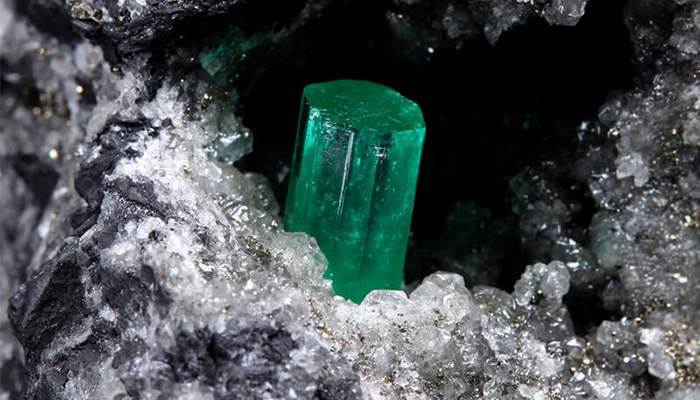
Origins in the Earth
Emerald is one of the most prized gemstones in the world, formed deep within the Earth under rare geological conditions. It belongs to the beryl mineral family and grows when beryllium rich minerals meet chromium or vanadium in high pressure and temperature environments. This process occurs in metamorphic and hydrothermal systems over millions of years, allowing crystals to develop slowly with their signature green color. The slow growth produces stones with unique clarity and variations in hue. Geological movements gradually bring emeralds closer to the surface, either embedded in rock formations or carried by water to alluvial deposits. Understanding these origins explains why emeralds are both rare and highly sought after for their vivid green color and natural allure.
Crystal Structure and Chemistry
Emerald’s chemical composition consists mainly of beryllium aluminum silicate. Its hardness and vibrant green color are the result of the crystal lattice incorporating trace amounts of chromium and vanadium. These elements interact with light in ways that create the rich, vivid green emerald is famous for. Slight changes in the concentration of these elements lead to variations in tone, depth, and brilliance. Gemologists study this chemistry to authenticate natural emeralds, detect treatments, and evaluate quality. The chemical structure is central to both beauty and resilience, allowing emeralds to withstand wear while maintaining their captivating color and clarity.
Major Sources
Emeralds are found in a handful of regions worldwide, each producing stones with distinct qualities. Colombia is renowned for its deep green, highly transparent emeralds that often set the standard for quality. Zambia produces darker stones with a slightly bluish hue, while Brazil offers lighter green examples with excellent clarity. Additional sources exist in other countries, but crystal size, internal features, and color are largely determined by the local geology. Emeralds can be extracted directly from hard rock or collected from alluvial deposits where natural erosion has concentrated the crystals. The origin of an emerald significantly influences its market value, color appeal, and rarity.
Varieties and Characteristics
Emeralds display a wide range of green shades, from light grassy tones to deep forest hues. Natural inclusions within the crystals give each stone a unique identity, with some adding character without diminishing beauty. These internal features, along with differences in transparency and color saturation, help classify emeralds into categories valued differently in the market. Exceptional stones exhibit brilliant color and minimal inclusions, while others are appreciated for the distinctive patterns formed during crystal growth. Understanding these visual traits allows collectors and jewelers to assess rarity and quality effectively, highlighting emerald’s complexity and charm.
Uses and Cultural Significance
Emerald has been treasured for thousands of years for both its beauty and symbolic meaning. In jewelry, it is used in rings, necklaces, earrings, and bracelets, admired for its vibrant green glow. Throughout history, emeralds have symbolized growth, renewal, and protection, often worn by royalty or incorporated into ceremonial objects. Beyond aesthetics, emeralds are studied for their geological and chemical properties, making them a subject of fascination for scientists and gem enthusiasts alike. Appreciating both the practical and symbolic roles of emeralds underscores why they remain one of the most admired and cherished gemstones in human history.