




Tourmaline
Origins in Nature
Tourmaline is a remarkable gemstone that forms deep within the Earth under complex geological conditions. It develops in igneous and metamorphic rocks when a combination of elements such as boron, aluminum, and various trace minerals come together during cooling and pressure changes. This process allows crystals to grow over millions of years, producing a wide array of colors that make tourmaline highly prized. Geological movements eventually bring these crystals closer to the surface, where they can be extracted from primary rock formations or found in alluvial deposits. Understanding the natural formation of tourmaline explains both its rarity and the extraordinary range of colors it exhibits.
Chemical Composition and Color Variety
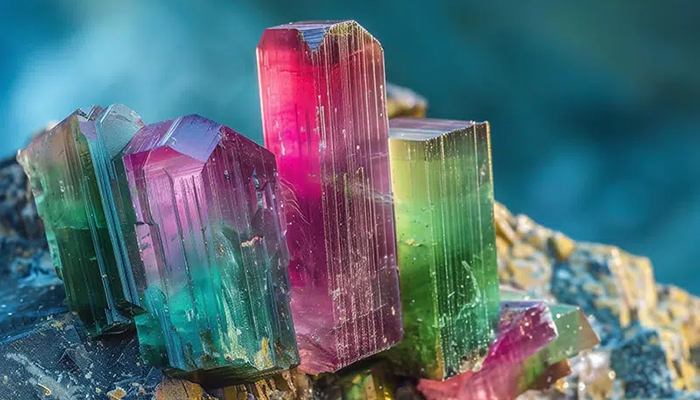
Tourmaline belongs to a complex silicate mineral family containing boron, aluminum, and various trace elements. Its chemical structure is responsible for its hardness, durability, and ability to display vivid colors. Different elements such as iron, manganese, or lithium influence the hue, creating shades of green, pink, blue, red, and even multicolored crystals. Some tourmalines display unique color zoning within a single stone, making each gem distinct. Gemologists study the chemical composition to authenticate natural stones, detect treatments, and determine value. This intricate chemistry allows tourmaline to offer an unparalleled spectrum of colors in the gemstone world.
Global Sources and Notable Locations
Tourmaline is mined in several regions, each producing stones with characteristic colors and qualities. Brazil is a leading source, offering a wide variety of vibrant crystals. Africa, including Mozambique and Nigeria, provides highly saturated stones that are sought after for jewelry. Afghanistan and Pakistan produce rare blue and pink tourmalines, while the United States is known for producing green and pink varieties. Crystals may be extracted directly from host rocks or collected from alluvial deposits shaped by natural erosion. The geographic origin influences color, clarity, and size, making it an important factor in evaluating tourmaline’s quality and rarity.
Varieties and Optical Characteristics
Tourmaline is known for its astonishing color diversity, ranging from soft pastels to intense saturated hues. Some stones exhibit bi-color or tri-color effects, with distinct zones of color visible in a single crystal. Transparency and clarity vary depending on formation conditions, and natural inclusions can add character and uniqueness. Certain varieties, such as watermelon tourmaline, display striking visual patterns that are highly sought after by collectors. Understanding these optical and physical characteristics allows gemologists and buyers to classify stones, assess value, and appreciate the complexity and beauty of tourmaline.
Uses and Cultural Significance
Tourmaline is prized both for its aesthetic appeal and symbolic meanings. In jewelry, it is used for rings, necklaces, bracelets, and earrings, offering vibrant color options for various designs. Historically, tourmaline has been associated with protection, balance, and healing, and has been worn as talismans across cultures. Beyond adornment, its hardness and optical properties have practical applications in electronics and scientific instruments. Recognizing both the visual beauty and cultural significance of tourmaline highlights why it remains a cherished gemstone and a versatile marvel of nature.