




Amethyst
Origins in Nature
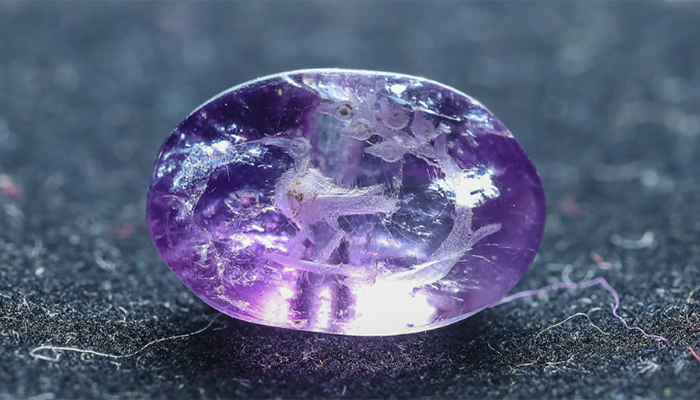
Amethyst is a stunning gemstone that forms over millions of years deep within volcanic rocks and mineral-rich veins. As silica rich fluids slowly cool and crystallize in rock cavities and fractures, they gradually develop into well-formed quartz crystals. The presence of trace iron and natural exposure to radiation during formation gives amethyst its characteristic purple hue, ranging from pale lavender to intense violet. Over time, geological movements bring these crystals closer to the surface, allowing them to be mined from solid rock or collected from deposits shaped by natural erosion. Understanding this formation process highlights why amethyst is both durable and highly prized for its vibrant color and enduring beauty.
Chemical Structure and Color Formation
Amethyst is composed of silicon dioxide arranged in a crystalline structure that gives it both hardness and clarity. Its purple hue arises from the presence of iron and natural exposure to radiation during formation, which creates subtle changes in the crystal lattice. Variations in iron concentration and environmental conditions result in a wide range of color intensity, from pale lavender to rich violet. Gemologists analyze these chemical properties to authenticate natural stones, identify treatments, and assess quality. The chemistry and crystal structure not only define amethyst’s aesthetic appeal but also its resilience and suitability for jewelry.
Global Sources and Major Deposits
Amethyst is found in many regions around the world, each producing stones with distinct qualities. Brazil is the largest producer, offering abundant crystals with deep, vibrant colors. Uruguay is known for high-quality dark violet stones with excellent clarity. Other sources include Zambia, Madagascar, Russia, and the United States, each contributing to the global supply. Amethyst crystals can be mined directly from volcanic rock formations or collected from alluvial deposits where natural forces have concentrated them. The origin of the stone influences color, transparency, and crystal size, making geographic source a key factor in determining value and desirability.
Varieties and Visual Characteristics
Amethyst displays a wide range of purple shades and sometimes exhibits unique patterns or zoning within a single crystal. Some stones show a gradient of color from base to tip, while rare specimens reveal bands or even secondary hues like red or blue under specific lighting. Clarity and transparency vary, with high-quality amethyst prized for deep uniform color and minimal inclusions. These characteristics are used to classify stones and assess their market value. Understanding the visual diversity of amethyst highlights the complexity and individuality of each gemstone, ensuring that every piece possesses its own distinct beauty.
Uses and Cultural Significance
Amethyst has long been valued for both its aesthetic qualities and symbolic meanings. In jewelry, it is used for rings, necklaces, bracelets, and earrings, admired for its elegant purple color and durability. Historically, amethyst has been associated with protection, calmness, and spiritual insight, often worn as a talisman or featured in religious artifacts. Beyond ornamentation, it is appreciated by gemologists and collectors for its formation and variety. Recognizing the practical and symbolic roles of amethyst explains why it remains a timeless gemstone cherished across cultures for its beauty and mystical qualities.