




Peridot
Formation of Peridot
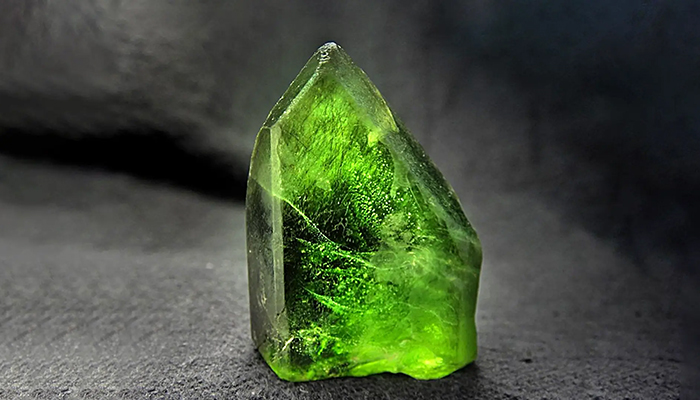
Peridot is a gemstone that originates deep within the Earth’s mantle, forming under high temperatures and pressure in magnesium-rich rocks. It often emerges in volcanic environments when magma rises toward the surface, carrying crystals along with it. Over time, these crystals are released through volcanic eruptions or erosion, appearing in basalt deposits and sometimes in meteorites. The unique formation conditions give peridot its distinctive clarity and vibrant green color, reflecting the natural processes and chemical environment from which it comes. Each crystal carries a geological history that spans millions of years, making every piece of peridot a glimpse into the Earth’s deep interior.
Composition and Structure of Peridot
Peridot is primarily composed of the mineral olivine, which combines magnesium, iron, silicon, and oxygen to form its characteristic silicate structure. This structure crystallizes in the orthorhombic system, creating elongated, prismatic crystals that contribute to its brilliance. The balance between magnesium and iron determines the shade of green, ranging from yellow-green to rich olive tones. Peridot’s structure also provides a moderate level of hardness and excellent transparency, allowing it to refract light beautifully and maintain durability for use in jewelry.
Peridot-Producing Regions
Major peridot deposits are found in countries such as the United States, Pakistan, Myanmar, and China. Arizona in the United States is renowned for producing some of the finest olive-green peridot, while Pakistan’s volcanic regions yield vivid green stones with exceptional clarity. Myanmar and China also supply high-quality peridot that is highly prized for both jewelry and collectors. The geological conditions in each region, including volcanic activity and mineral composition, influence the size, color, and clarity of the stones, providing a wide variety for gem enthusiasts around the world.
Varieties and Unique Characteristics
Peridot is celebrated for its consistent green hue, yet subtle variations in tone and intensity make each stone unique. It is typically free of inclusions, offering excellent transparency, but some specimens may contain small natural markings that add character. Unlike many gemstones, peridot is rarely found in colors outside its green spectrum, making it instantly recognizable. Some peridot also shows a slightly golden or yellowish tint depending on its iron content. Its vibrant color and distinctive glow have made it a popular gemstone for centuries, admired for both aesthetic appeal and symbolic significance.
Applications and Symbolism of Peridot
Peridot is widely used in jewelry, including rings, earrings, necklaces, and bracelets, where its vibrant green color adds energy and elegance. Beyond its decorative use, peridot has been associated with protection, prosperity, and healing in various cultures throughout history. Ancient civilizations believed it could ward off negative energy and bring the wearer happiness and vitality. Today, peridot continues to be cherished for both its beauty and metaphysical properties, symbolizing growth, renewal, and positive energy, ensuring its enduring popularity among gemstone enthusiasts worldwide.