




Ruby
The Geological Formation of Ruby
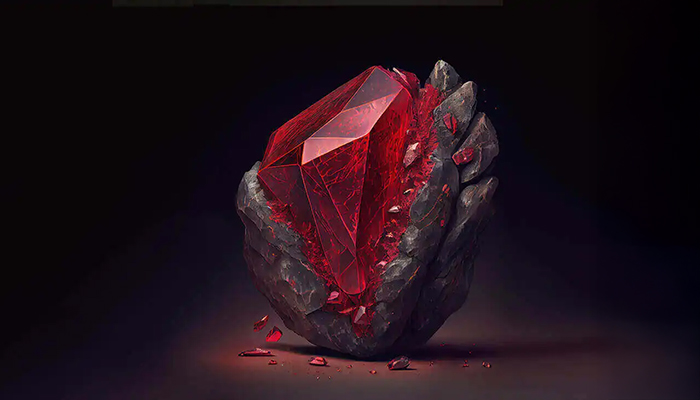
Ruby is formed deep within the Earth where extreme heat and pressure transform aluminum rich rocks into the mineral corundum. Trace amounts of chromium entering the crystal structure give ruby its signature red color. This slow geological process allows the crystal to grow with remarkable hardness and clarity. Over millions of years tectonic movements and erosion bring these crystals closer to the surface, where they can be discovered in alluvial deposits or embedded in host rock. The variations in red hue, saturation, and internal inclusions are directly linked to the specific environmental conditions during formation. Understanding these geological factors explains why natural rubies are rare and highly prized for their durability and vibrant color.
The Chemical Composition of Ruby
Ruby is composed primarily of aluminum oxide arranged in a dense crystal lattice that contributes to its exceptional hardness. The striking red color originates from chromium ions within the lattice, which absorb certain wavelengths of light and produce the rich red appearance. Minor variations in chromium content and the presence of other trace elements can influence the intensity and tone of the color. Gemologists study these chemical details to determine authenticity, identify treatments, and evaluate value. The chemical structure not only defines the visual qualities of ruby but also underpins its resilience, making it suitable for jewelry and technological applications that require strong transparent materials.
Primary Sources and Geographic Origins of Ruby
Rubies are primarily sourced from regions in Asia and Africa, each providing unique characteristics. Myanmar is historically the most famous source, producing deep red stones with exceptional clarity. Thailand and Cambodia are known for darker and more brownish red tones. In Africa, countries such as Mozambique and Madagascar have become significant sources, offering vibrant stones in larger sizes. Ruby deposits can be found both in primary rock formations and secondary alluvial deposits created by water erosion. Geographic origin affects not only color and clarity but also crystal size and inclusion patterns, making it a critical factor in gem identification and valuation.
Understanding the Different Types of Ruby
While most people recognize ruby as a red gemstone, its shades range from pinkish red to deep blood red. Variations in tone, saturation, and transparency define the different types of ruby and influence market value. Some rubies display phenomena such as color zoning or asterism, creating a star-like effect under light. These characteristics arise from the crystal’s internal structure and growth conditions. Classifying rubies by these traits helps gemologists and collectors assess rarity and aesthetic appeal. This diversity demonstrates that ruby is not a singular appearance but a spectrum of vibrant red gemstones with distinct qualities.
Practical and Cultural Uses of Ruby
Ruby has long been valued for both its beauty and symbolic significance. In jewelry, it is a preferred choice for rings, necklaces, and earrings due to its hardness and enduring polish. Technologically, ruby is used in lasers, precision instruments, and high-wear components that require strong transparent material. Culturally, ruby has symbolized passion, protection, and prosperity in many civilizations. It has been worn by royalty and featured in religious and ceremonial contexts. Understanding these applications highlights why ruby continues to hold both practical and symbolic importance, making it one of the most esteemed gemstones in the world.